
Customer Test Guide: CNC Stirrup Bender Conversion from 380V to 220V
Customer Test Guide: CNC Stirrup Bender Conversion from 380V to 220V
1. Pre-operation Safety Instructions (Mandatory)
1. All operations must be performed with the power disconnected. Operators shall wear insulating gloves and ensure reliable grounding of the machine body. Live wiring or cabinet opening for maintenance is strictly prohibited.
2. Confirm stable 220V single-phase mains power supply on site. The wire diameter of the power line must meet the load requirements of the equipment. Long-distance power strips are not allowed for power supply.
3. After the conversion is completed, check all wiring and terminals to ensure no looseness, wrong connection or exposed copper wires before switching on the power.
2. Pre-power-on Inspection After Conversion
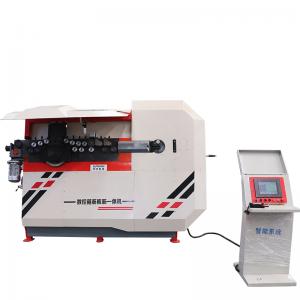
1. Check the internal wiring of motors, inverters and control boxes, and confirm all wires are reconnected in accordance with the 220V single-phase standard with clear distinction of phase line, neutral line and ground line.
2. Verify that the inverter parameters are fully adjusted correspondingly, including input voltage, motor rated voltage and operation mode, which must be switched to the 220V adaptive mode.
3. Mechanical inspection: Ensure gears, belts, molds and guide wheels are free of jamming. Manually rotate the machine to confirm smooth operation without abnormal noise or stuck failure.
4. Reset the emergency stop button and install all protective covers in place.www.luyuanmachinery.com ,professional rebar processing equipment manufacturer
3. Step-by-Step Test Operation Procedure
Step 1: No-load Power-on Test (No Rebar Feeding)
1. Turn on the main power switch. Observe the distribution box and inverter indicators: normal power indicator on, no fault alarm or error flashing code.
2. Control the panel to perform jog forward and reverse rotation tests:
- The machine runs stably without motor abnormal noise, vibration or burning smell.
- No overload, overvoltage or undervoltage fault codes appear on the inverter.
3. Keep no-load continuous operation for 5-10 minutes. Monitor the temperature of the motor and electrical box to ensure normal temperature rise without overheating or abnormal vibration.
Step 2: No-load Functional Operation Test
1. Test single actions of each station including feeding, bending, cutting and resetting for 3-5 times respectively.
2. Check limit switches, photoelectric sensors and travel switches to ensure sensitive triggering and accurate shutdown & positioning.
3. Test start-stop and emergency stop functions: the whole machine stops immediately after pressing the emergency stop button, and can start normally after resetting.
Step 3: Load Test with Rebar (Formal Working Condition)
1. Select standard small-diameter steel bars for the first trial test, and correctly feed materials and fix the molds.
2. Set conventional processing parameters (bending angle, length and speed), and run the machine at low speed firstly.
3. Complete single rebar trial processing, check the forming dimension, bending angle and cutting flatness to ensure qualified finished products.
4. Conduct continuous batch trial operation to verify the stability and consistency of machine processing performance under long-term working conditions.
4. Post-test Inspection & Daily Reminders
1. After the test, power off the equipment, check all wiring terminals again for looseness caused by vibration.
2. Confirm the 220V converted equipment operates stably with all functions normal, ready for formal production.
3. Daily operation must strictly follow the 220V power specification, avoid overloaded operation and irregular parameter modification.
4. Regularly inspect electrical components and wiring to extend the service life of the converted equipment.