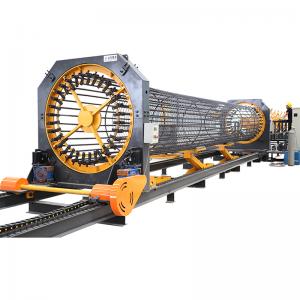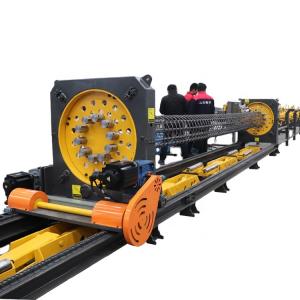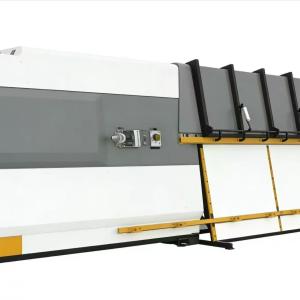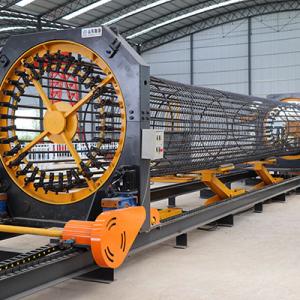
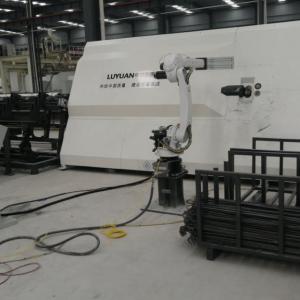
Maintenance Instructions for CNC Steel Cage Stirrup Bending Machine
Maintenance Instructions for CNC Steel Cage Stirrup Bending Machine
1. Safety Precautions
• Power Off First: Cut off the main power supply before any maintenance, repair or cleaning. Lock the electrical box and hang a "Maintenance In Progress" warning sign.
• No Live Work: Never perform adjustments, repairs or cleaning while the machine is running.
• PPE Required: Wear safety helmet, protective goggles, anti-slip gloves and safety shoes during operation and maintenance.
• Prohibited Environment: Do not use or store the machine in open air under direct sunlight, rain or snow. Install it in a dry, ventilated and sheltered area.
2. Daily Maintenance (Every Shift)
2.1 Cleaning
• Remove steel chips, dust and oil stains from the machine surface, guide rails, gears, sensors and control panel with a clean cloth or air gun.
• Clean the work area to remove obstacles and ensure unobstructed operation.
• Empty the chip tray and clean the chip conveyor.
2.2 Inspection
• Check all fasteners (bolts, nuts) for tightness; tighten any loose ones.
• Inspect cables, wires and pneumatic hoses for damage, aging or leakage.
• Verify the clamping device, cutting tool and bending die are in good condition and correctly installed.
• Check the lubrication system: ensure sufficient oil/grease and no leaks.
• Test emergency stop buttons and safety interlocks for normal operation.
2.3 Lubrication
• Lubricate transmission parts (bearings, chains, gears) with the specified lubricant.
• Grease all grease fittings on the machine (follow the lubrication diagram).
2.4 End-of-Shutdown
• Return all axes to the home position.
• Cut off the power supply and close the air source.luyuanmachinery,which is the best stirrup bender machine manufacturer in china
• Cover the machine with a dust cover if not used for a long time.
3. Weekly Maintenance
• Lubrication System: Check the oil level and quality of the lubrication tank; replace if deteriorated.
• Pneumatic System: Drain water from the air tank and filters; check air pressure (0.6–0.8 MPa).
• Transmission Components: Check the tension and wear of synchronous belts, chains and gears; adjust or replace if necessary.
• Guide Rails & Slides: Clean and lubricate guide rails; check for wear or scratches.
• Electrical Cabinet: Blow dust inside the cabinet with low-pressure air; clean electrical components.
4. Monthly Maintenance
• Hydraulic System (if equipped): Check hydraulic oil level and quality; replace the oil filter (first replacement after 100 hours, then every 500 hours).
• Motor & Drives: Check motor temperature, noise and vibration; tighten electrical connections.
• Sensors & Calibration: Clean and calibrate sensors; check positioning accuracy and repeatability.
• Wear Parts: Inspect and measure wear parts (cutting blades, bending dies, rollers); replace if worn beyond limits.
• Grounding System: Check grounding resistance to ensure electrical safety.
5. Quarterly/ Semi-Annual Maintenance
• Hydraulic Oil Replacement: Drain, clean the hydraulic tank and replace with new hydraulic oil (ISO VG46 or VG32).
• Electrical System Inspection: Professional electrician to inspect all wiring, contactors, relays and cooling fans; replace damaged components.
• Accuracy Calibration: Use precision tools (dial indicator, laser interferometer) to calibrate machine accuracy; adjust backlash and parallelism.
• Anti-Rust Treatment: Apply anti-rust oil to guide rails, lead screws and other metal surfaces; check for rust and corrosion.
6. Annual Maintenance
• Complete Overhaul: Disassemble, inspect, clean and lubricate all components; replace severely worn parts.
• System Upgrade: Check and update CNC system software; backup all programs and parameters.
• Performance Test: Conduct a full performance test to ensure all functions meet technical specifications.
7. Lubrication Specifications
|
Lubrication Point |
Lubricant Type |
Lubrication Cycle |
|
Guide Rails |
Anti-wear Hydraulic Oil (ISO VG46) |
Daily |
|
Bearings & Chains |
Lithium-based Grease |
Weekly |
|
Gearbox |
Gear Oil (CKC100) |
Quarterly |
|
Hydraulic System |
Hydraulic Oil (ISO VG46) |
Semi-annually |
8. Maintenance Records
• Record all maintenance activities, including date, operator, work content, parts replaced and abnormal conditions.
• Keep records of operation hours, oil changes, calibration and repairs for trend analysis.
9. Troubleshooting
• Abnormal Noise/Vibration: Immediately stop the machine; check for loose parts, lack of lubrication or foreign objects.
• Hydraulic Leakage: Stop the machine; check and tighten fittings; replace damaged seals.
• Sensor Failure: Clean the sensor; check wiring and connections; calibrate or replace if necessary.
• Motor Overheating: Check load, ventilation and power supply; reduce continuous operation time.